Lumo: Designing Accessible Urban Navigation for Invisible Disabilities
A conceptual design project created for academic purposes.
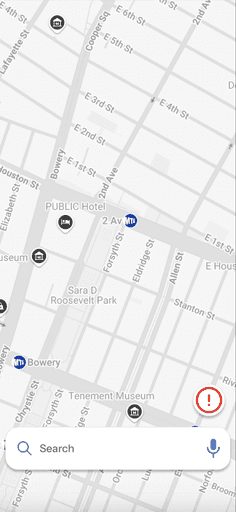
Lumo is a concept I developed in collaboration with Toyota Motors North America (TMNA) to create a more inclusive and accessible experience for pedestrians with invisible disabilities. The project focused on New York City, where the complexity and intensity of urban environments can be particularly challenging for people with conditions such as anxiety, PTSD, ADHD, or sensory sensitivities.
Lumo provides real-time, crowdsourced updates about construction, road closures, police activity, and other environmental factors, empowering users to navigate confidently and comfortably.
Role
Product Designer
Tools
Figma, Adobe CC, Miro
Timeline
January - May 2025
Skills
UI/UX, Prototyping, Information Architecture,
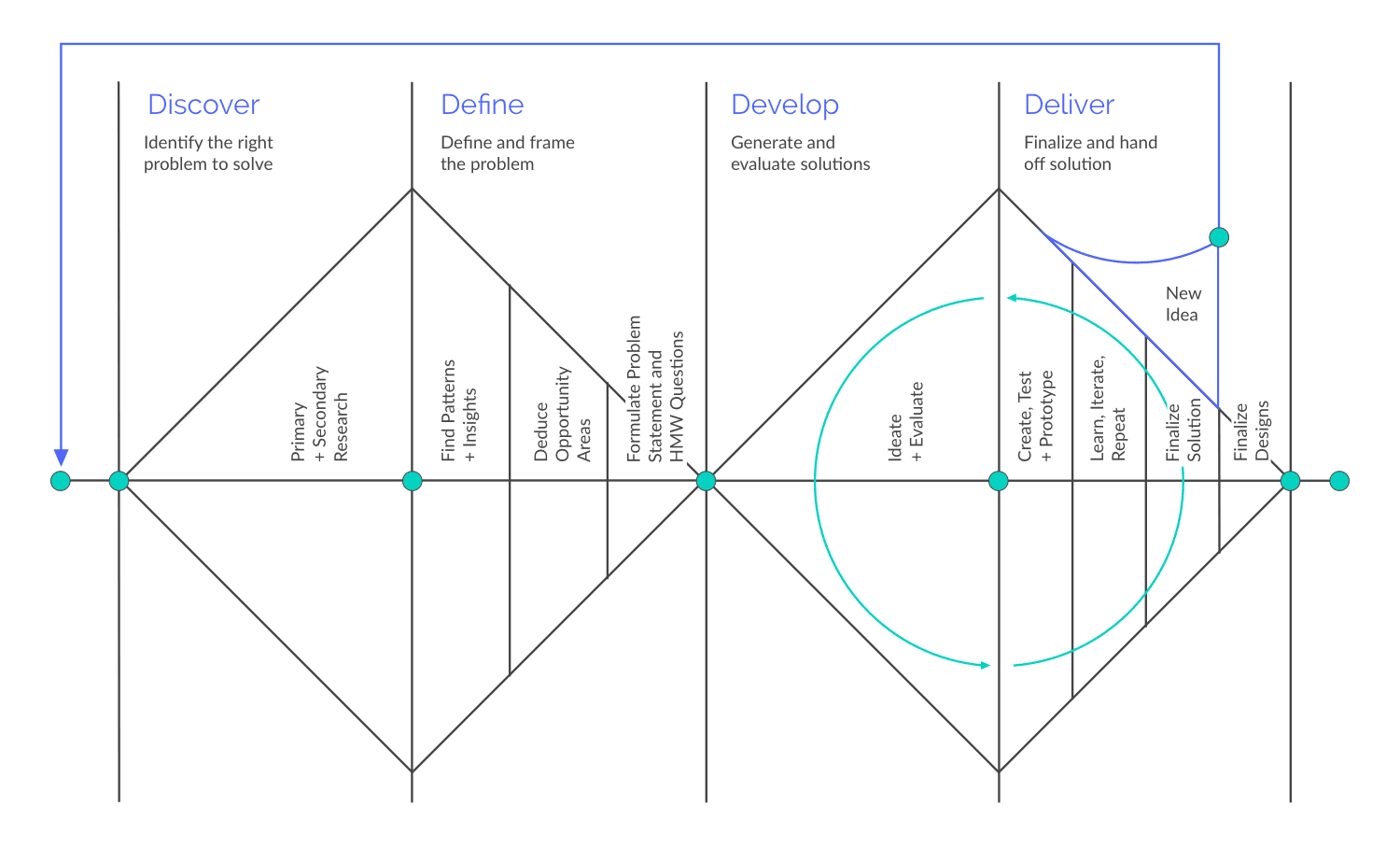
I used the Double Diamond framework to guide my process, moving from broad exploration to focused refinement across the four phases. This structure allowed me to stay methodical while remaining flexible and responsive to research insights.
Introduction
Lumo originated from Toyota Motors North America’s (TMNA) work on Woven City in Japan, a prototype for inclusive, human-centered mobility. Inspired by that vision, I explored how accessibility could translate to a dense urban setting like New York City. While studying how pedestrians with visible disabilities navigate through physical aids and infrastructure, I realized that those with invisible disabilities, such as anxiety or sensory sensitivities, face entirely different challenges. Their barriers aren’t physical but emotional and sensory, shaped by unpredictability and overstimulation.
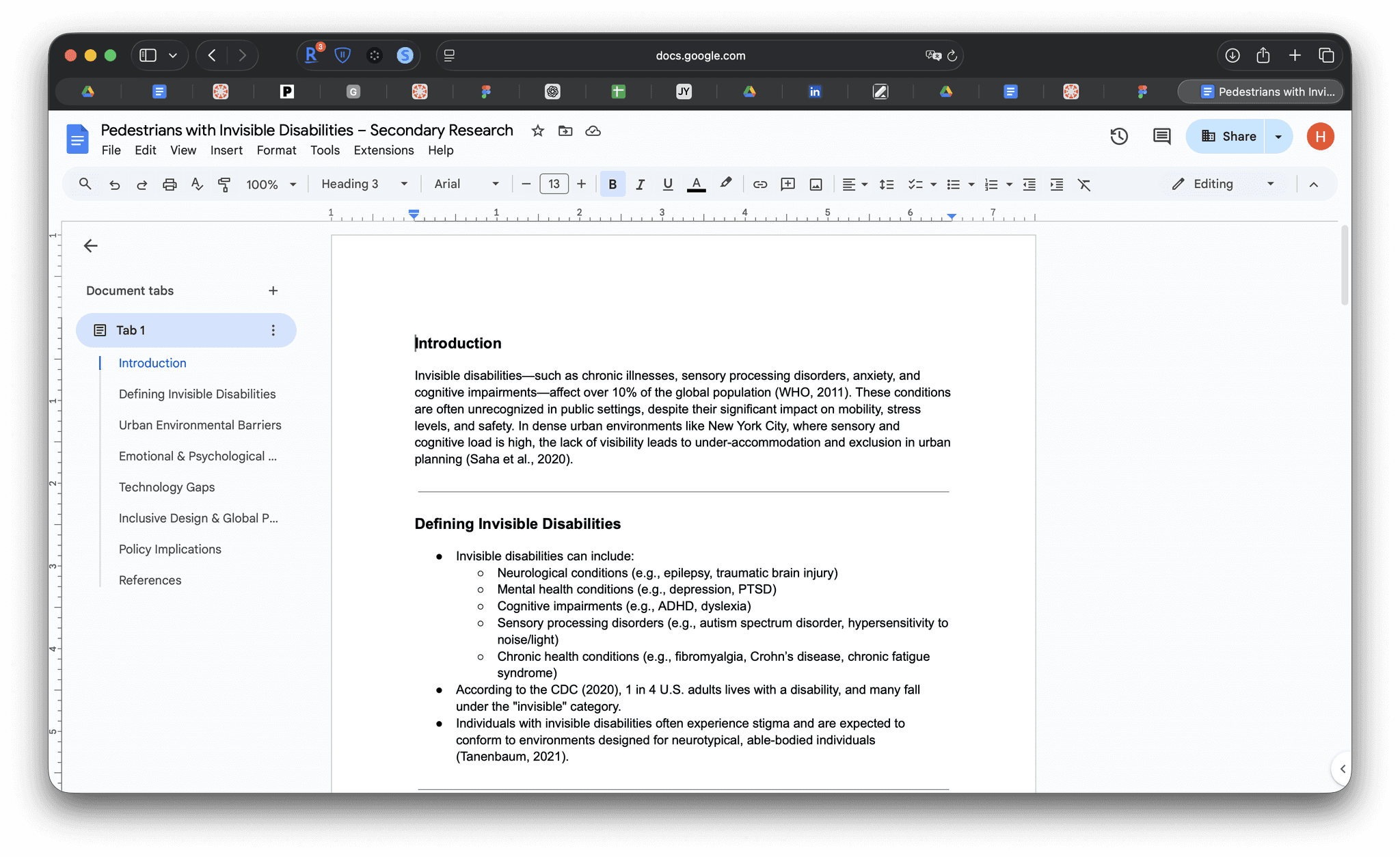
This insight became the foundation for Lumo:
Designing a calmer, more informed way for people to navigate the city confidently
Research
In an effort to explore this foundation, I conducted qualitative field research.
Observations
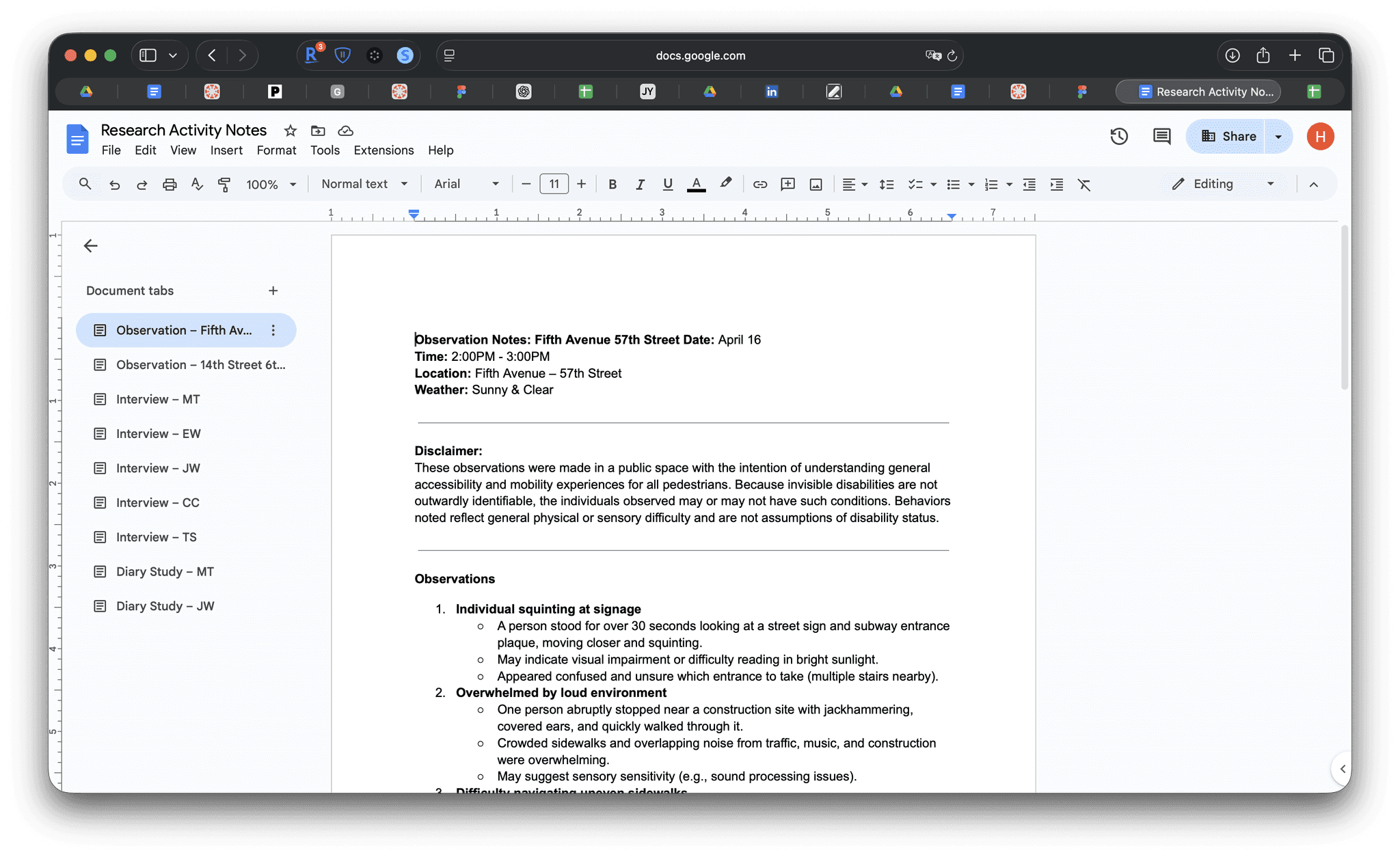
I conducted field observations at 14th Street & 6th Avenue and Fifth Avenue & 57th Street in New York City. These sessions focused on how environmental factors affect navigation for people with visible and invisible disabilities.
Key Findings
Sensory Overload
Fatigue and Strain
Crowd-Related Stress
Interviews
In addition, I also conducted 5 interviews with individuals navigating New York City under various physical or sensory challenges.
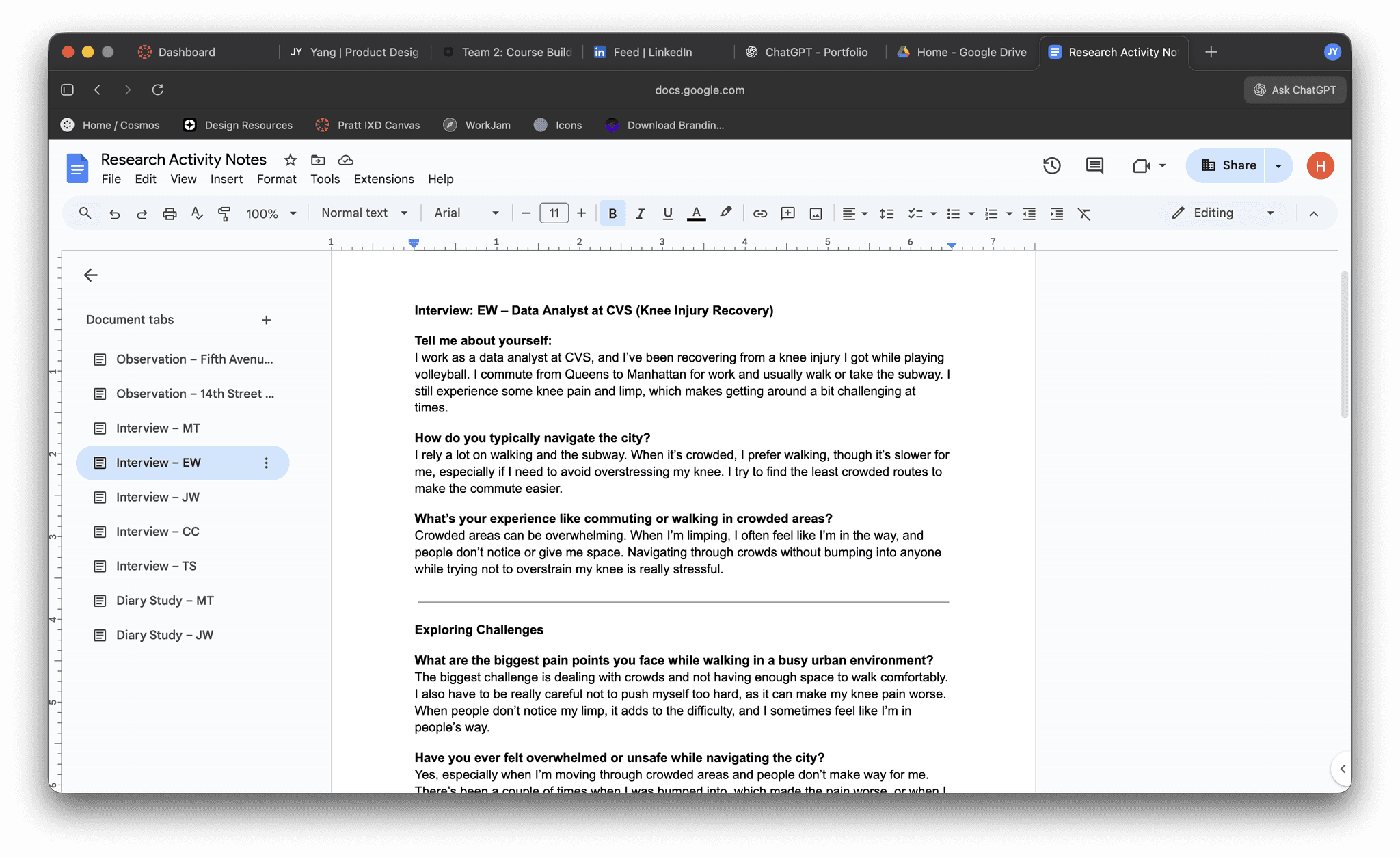
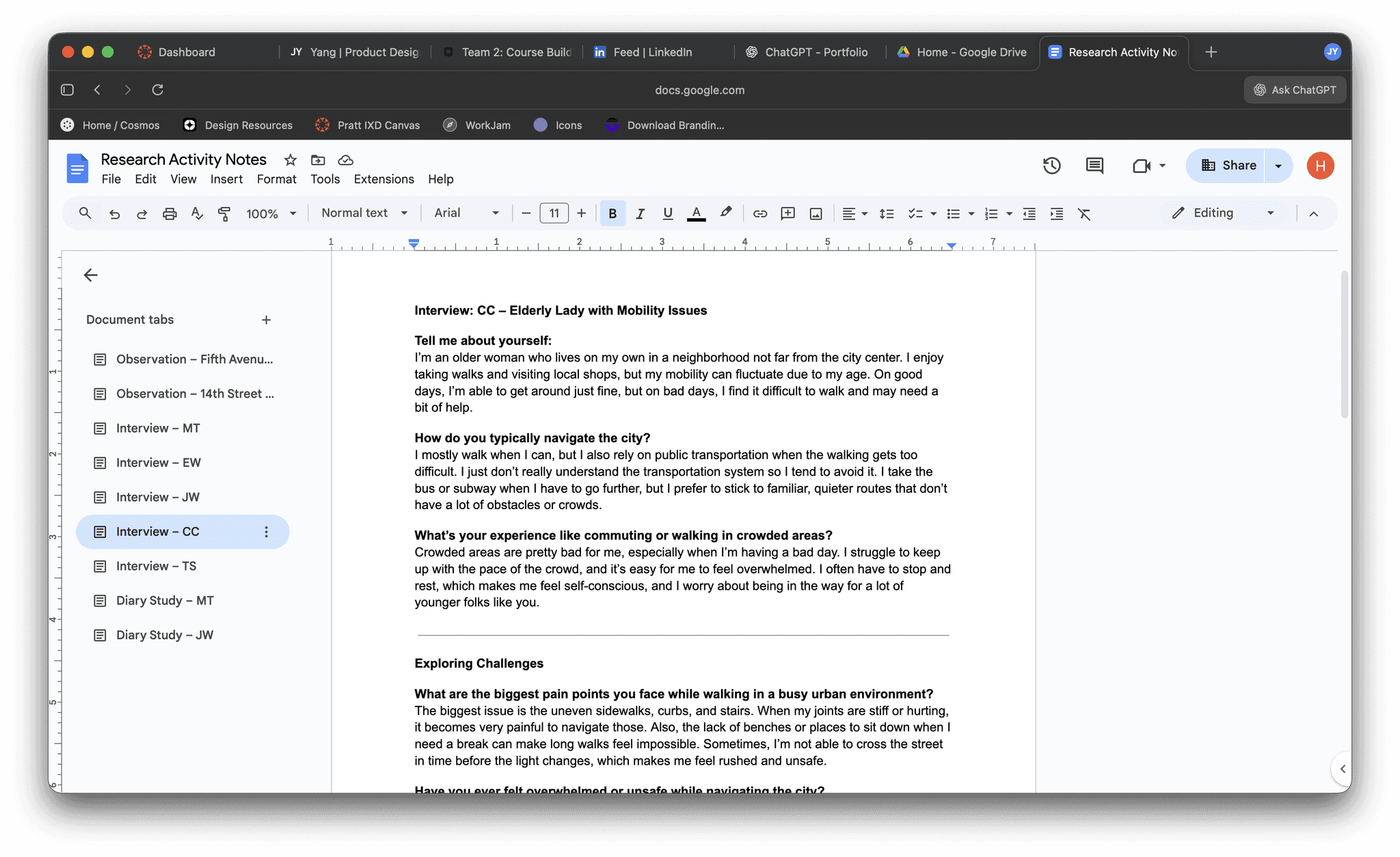
Key Findings
Design Friction
Environmental Volatility
Proactive Guidance
Diary Study
I conducted a 5-day diary study with 2 participants to understand how environmental conditions, crowding, and personal factors affect pedestrian experiences and perceived safety. Participants logged their daily commutes and walks, noting what made them feel safe, unsafe, or anxious, as well as enjoyable aspects of their journey.
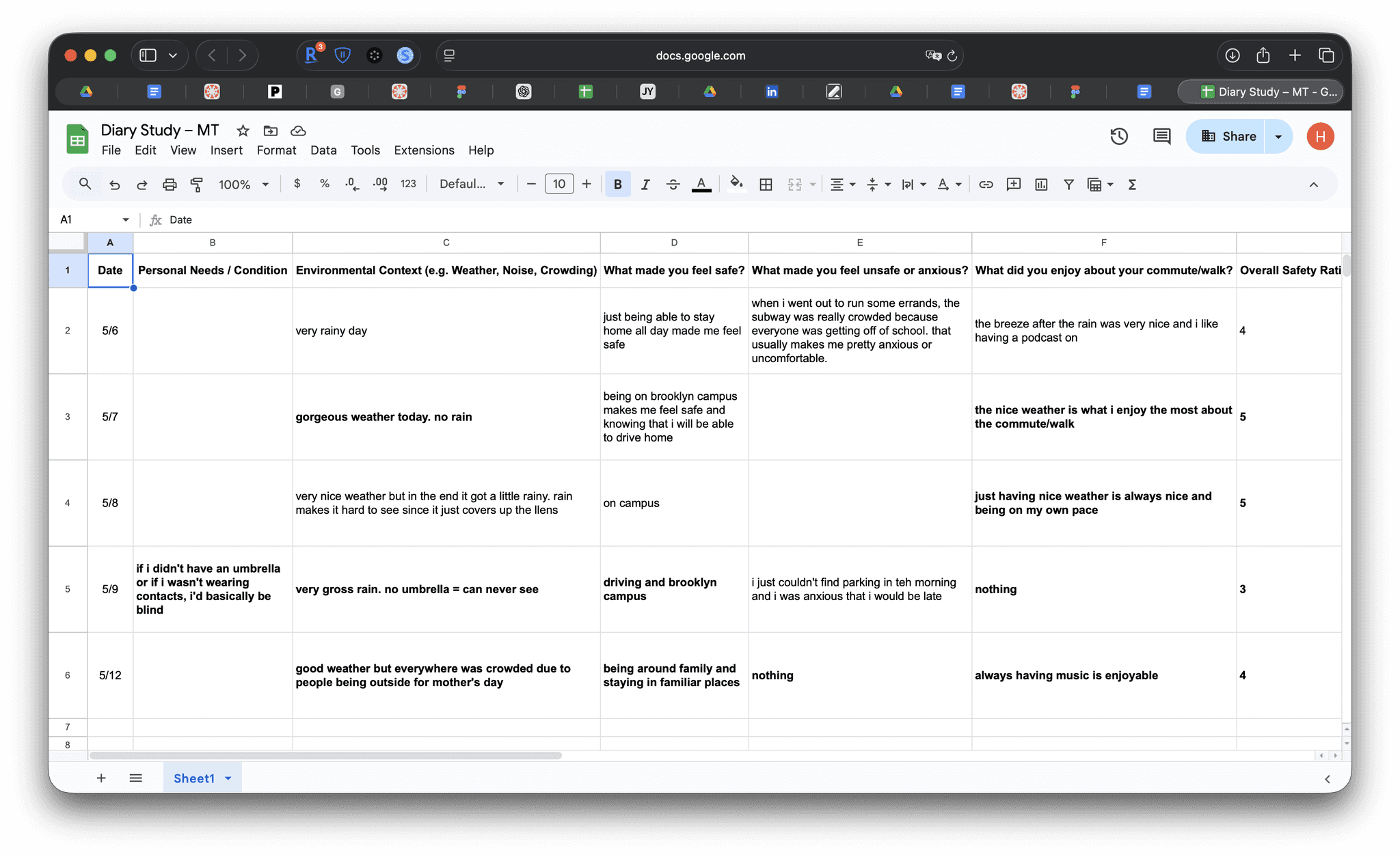
Key Findings
Familiarity Improves Safety
Enjoyable Cues Reduce Stress
Weather Shapes Sense of Safety
Synthesis
From these observations, interviews, and diary studies, I analyzed recurring patterns in pedestrian experiences. By grouping related challenges and coping strategies, I identified two emerging themes:
Environmental and Contextual Challenges
Strategies for Personal Comfort and Safety
Design
Rather than spending time on low-fidelity sketches, I moved directly into high-fidelity wireframes and visual designs. The research findings had already provided strong clarity on user behaviors, information hierarchy, and accessibility needs, allowing me to focus on testing visual hierarchy, interaction patterns, and emotional tone earlier in the process.
This approach accelerated iteration cycles, helping me evaluate how color contrast, spacing, and iconography influenced user comfort and comprehension, elements critical for individuals with sensory or cognitive sensitivities.
Listening...
Conversation UI
A simple, message-based interface helps users interact naturally with the system, asking about current conditions or confirming accessibility details without overwhelming navigation flows. This conversational layer gives users emotional reassurance and a sense of presence.
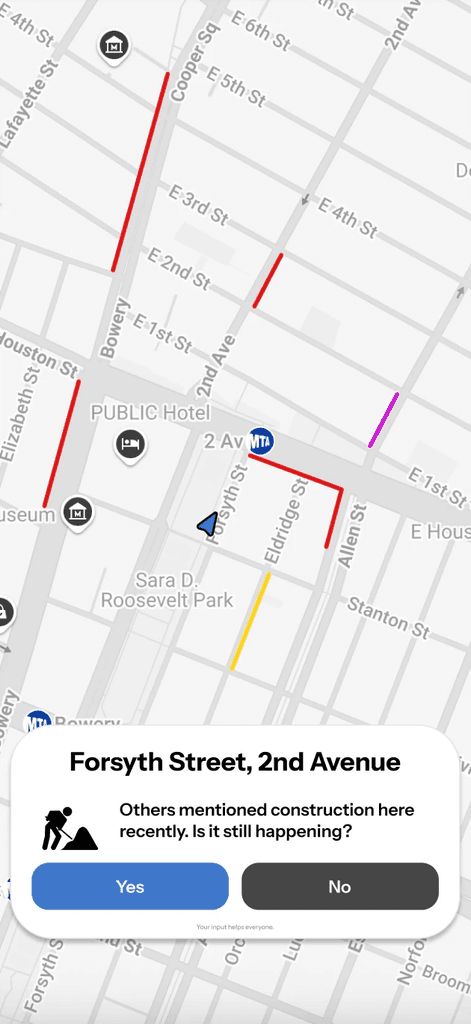
14th Street, 6th Avenue
Others mentioned construction here recently. Is it still happening?
Yes
No
Your input helps everyone.
Confirmation Button
When a user’s GPS detects proximity to a reported location, they receive a subtle prompt asking whether the issue (e.g., construction, closure, noise) is still present. This confirmation flow keeps data accurate and relevant for others planning their trips, reinforcing a sense of shared community responsibility.
57th Street, 6th Avenue
Heads up! 24 other users reported that there’s construction in the area. Expect some noise and tighter walking space.
Okay
Notifications
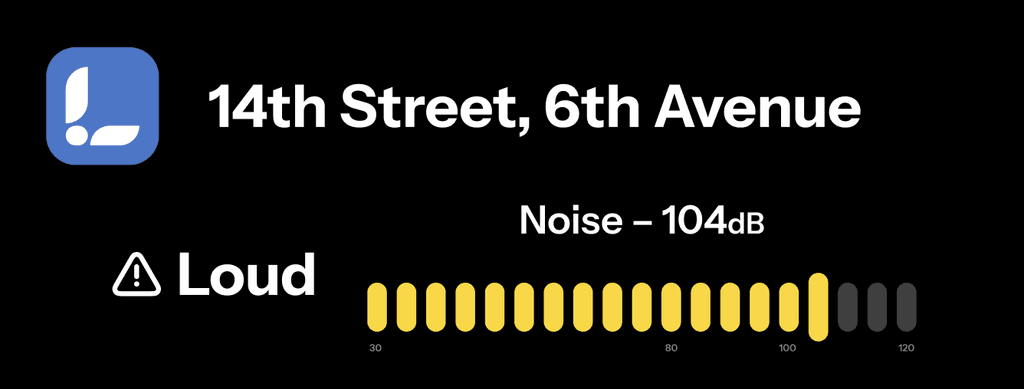
Noise Decibel Level
A feature that provides real-time environmental awareness, helping users prepare for or avoid areas with high sensory stimulation such as sirens, construction, or large crowds. This directly supports users with anxiety or sensory sensitivities.
Results
The Lumo prototype served as both a design exploration and a learning opportunity, helping me understand how accessibility can extend beyond physical infrastructure to address cognitive, emotional, and sensory needs in urban mobility.
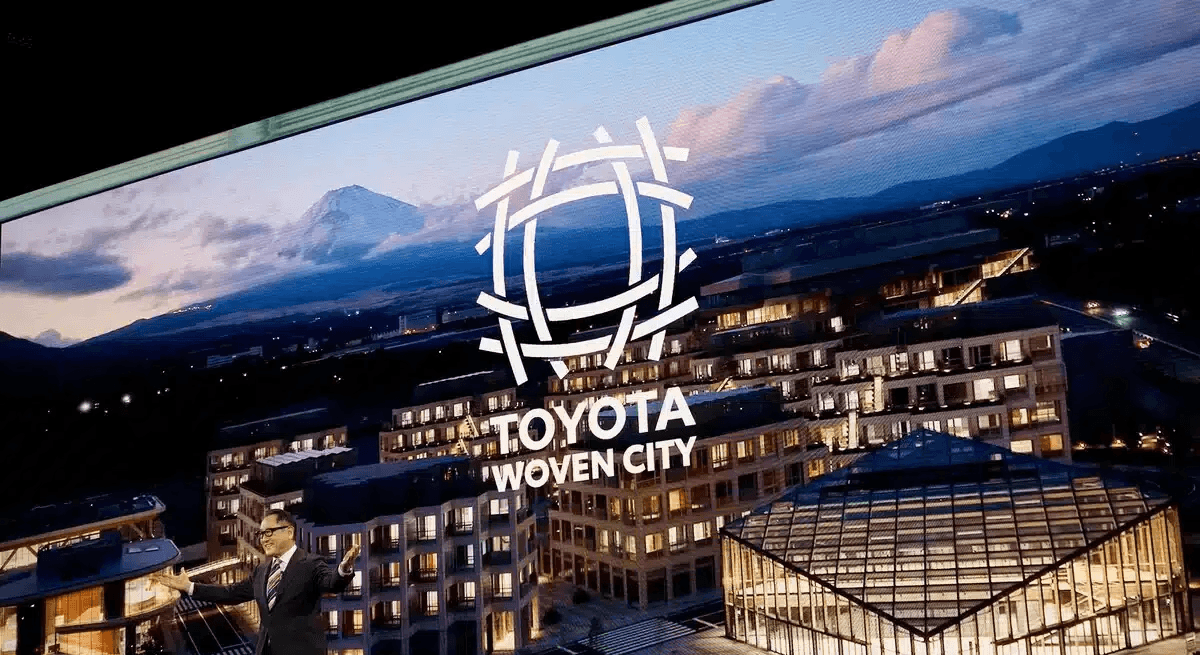

I presented Lumo to researchers at Toyota Woven City and to a VP of Two Sigma to share my findings and gather feedback on how accessibility-focused design could inform future smart city and mobility initiatives. The discussion centered on how Lumo could evolve beyond its initial prototype with key feedback being:
Notifications are well-considered — could they adapt dynamically to context, like urgency or user sensitivity thresholds?
How might these emotional and sensory design principles scale beyond New York, where density and pace differ?
How do you prevent misinformation or fatigue from too many prompts?
This project pushed me to think beyond traditional accessibility, to design for emotional and sensory balance in everyday mobility. By blending behavioral research with interaction design, I learned how technology can quietly adapt to human variability rather than expect users to adapt to it. Presenting to researchers and industry leaders reaffirmed that inclusive design isn’t just about eliminating barriers, but creating systems that listen to the pace, perception, and needs of each individual in motion.